
IGF-1 LR3 (1 mg Vial)
Quickstart Highlights
IGF-1 LR3 (Long R3 Insulin-like Growth Factor-1) is a modified analog of human IGF-1 with significantly extended half-life, studied for its anabolic and metabolic effects[1]. This synthetic variant exhibits reduced binding to IGF binding proteins, allowing enhanced bioavailability and systemic activity[2]. This educational protocol presents a once-daily subcutaneous approach with conservative titration for research applications.
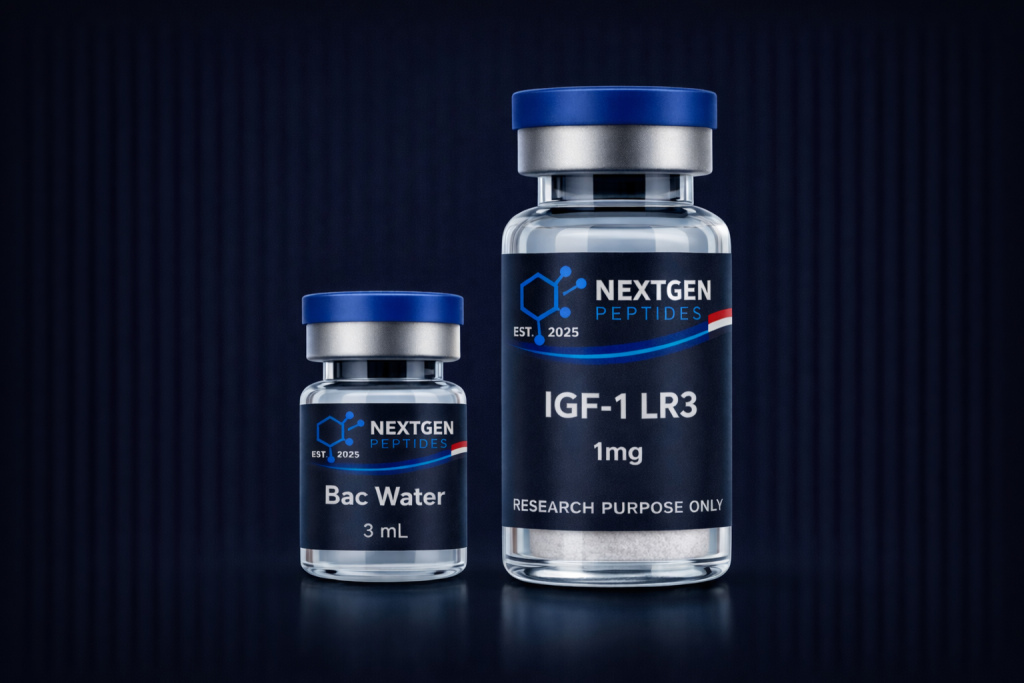
- Reconstitute: Add 3.0 mL bacteriostatic water → ~0.333 mg/mL concentration (333 mcg/mL).
- Typical daily range: 20–50 mcg once daily subcutaneously (gradual titration recommended).
- Easy measuring: At 0.333 mg/mL, 1 unit = 0.01 mL ≈ 3.33 mcg on a U-100 insulin syringe.
- Storage: Lyophilized: freeze at −20 °C (−4 °F) for up to 12 months; after reconstitution, refrigerate at 2–8 °C (35.6–46.4 °F) and use within 30 days; avoid repeated freeze–thaw cycles.
Dosing & Reconstitution Guide
Educational guide for reconstitution and daily dosing
Standard / Gradual Approach (3 mL = ~0.333 mg/mL)
|
Week |
Daily Dose |
Units (per injection) (mL) |
|---|---|---|
|
Weeks 1–2 |
20 mcg (0.02 mg) |
6 units (0.06 mL) |
|
Weeks 3–4 |
40 mcg (0.04 mg) |
12 units (0.12 mL) |
|
Weeks 5–8 |
50 mcg (0.05 mg) |
15 units (0.15 mL) |
Frequency: Inject once daily subcutaneously, typically in the morning or post-workout with food intake to mitigate insulin-like effects on blood glucose[3]. This schedule uses the maximum practical dilution (3.0 mL) for clear measurements. For ≤10-unit (≤0.10 mL) administrations, consider 30- or 50-unit insulin syringes for improved readability.
Reconstitution Steps
- Draw 3.0 mL bacteriostatic water with a sterile syringe.
- Inject slowly down the vial wall to avoid foaming; do not shake.
- Gently swirl or roll until the lyophilized powder dissolves completely into a clear solution.
- Label the vial with reconstitution date and refrigerate at 2–8 °C (35.6–46.4 °F), protected from light.
- Use within 30 days of reconstitution; for longer storage, prepare aliquots and freeze at −20 °C (−4 °F) for up to 3–6 months[4].
Supplies Needed
Plan based on an 8–16 week daily protocol with gradual titration.
- Peptide Vials (IGF-1 LR3, 1 mg each):
- 8 weeks ≈ 3 vials (~2.24 mg total needed)
- 12 weeks ≈ 4 vials (~3.64 mg total needed)
- 16 weeks ≈ 6 vials (~5.04 mg total needed)
- Insulin Syringes (U-100, 0.5 mL or 1 mL):
- Per week: 7 syringes (1/day)
- 8 weeks: 56 syringes
- 12 weeks: 84 syringes
- 16 weeks: 112 syringes
- Bacteriostatic Water (10 mL bottles): Use 3.0 mL per vial for reconstitution.
- 8 weeks (3 vials): 9 mL → 1 × 10 mL bottle
- 12 weeks (4 vials): 12 mL → 2 × 10 mL bottles
- 16 weeks (6 vials): 18 mL → 2 × 10 mL bottles
- Alcohol Swabs: One for the vial stopper + one for the injection site each day.
- Per week: 14 swabs (2/day)
- 8 weeks: 112 swabs → recommend 2 × 100-count boxes
- 12 weeks: 168 swabs → recommend 2 × 100-count boxes
- 16 weeks: 224 swabs → recommend 3 × 100-count boxes
- Sharps Container: For safe disposal of used needles and syringes[5].
- Fast-acting carbohydrate source: Glucose tablets or juice on hand during cycle to address potential hypoglycemia symptoms, especially during dose titration[6].
Protocol Overview
Concise summary of the once-daily subcutaneous regimen.
- Goal: Support anabolic processes and metabolic function through enhanced IGF-1 activity with extended bioavailability[1].
- Schedule: Daily subcutaneous injections for 8 weeks (standard cycle); may extend to 12 weeks with appropriate off-periods.
- Dose Range: 20–50 mcg daily with gradual titration; conservative protocols remain at ≤50 mcg/day.
- Reconstitution: 3.0 mL per 1 mg vial (~0.333 mg/mL or 333 mcg/mL) for precise unit measurements.
- Storage: Lyophilized powder frozen at −20 °C (−4 °F); reconstituted solution refrigerated at 2–8 °C (35.6–46.4 °F); avoid repeated freeze–thaw cycles.
- Cycling: Common approach is 8 weeks on, 4–8 weeks off to prevent receptor desensitization[7].
Dosing Protocol
Suggested daily titration approach for tolerance assessment.
- Start (Weeks 1–2): 20 mcg daily to assess tolerance, particularly regarding blood glucose effects[6].
- Titrate (Weeks 3–4): Increase to 40 mcg daily if Week 1–2 well-tolerated with no significant hypoglycemic symptoms.
- Maintain (Weeks 5–8): Hold at 50 mcg daily; this is considered the conservative upper end for most research protocols[2].
- Frequency: Once per day subcutaneously; timing often aligned with meals (morning or post-workout) to manage insulin-like effects.
- Cycle Length: 8 weeks is standard; 12-week protocols exist but may show diminished returns beyond Week 6–8[7].
- Site Rotation: Rotate injection sites systematically (abdomen, thighs, upper arms) to prevent local irritation or lipohypertrophy[8].
Storage Instructions
Proper storage is critical to maintain peptide stability and potency.
- Lyophilized (unopened): Store at −20 °C (−4 °F) or colder (−80 °C optimal) in dry, dark conditions for up to 12 months[4]; short-term storage at 2–8 °C (35.6–46.4 °F) for several months is acceptable.
- Reconstituted solution: Refrigerate at 2–8 °C (35.6–46.4 °F) immediately after mixing; use within 30 days for optimal potency[9].
- Extended storage of reconstituted solution: For storage beyond 30 days, prepare sterile aliquots and freeze at −20 °C (−4 °F); aliquots remain stable for 3–6 months[4]. Never refreeze a thawed vial.
- Handling: Allow frozen vials to reach room temperature before opening to minimize condensation; always inspect solution for clarity (discard if cloudy or contains particles)[10].
- Protection: Keep all vials protected from light and maintain cold chain during storage.
Important Notes
Practical considerations for consistency, safety, and optimal outcomes.
- Sterile technique: Always use new, sterile insulin syringes for each injection; dispose immediately in a sharps container[5]. Follow “one needle, one syringe, only one time” practice.
- Site rotation: Systematically rotate injection sites between abdomen (at least 2 inches from navel), outer thighs, and upper arms to reduce local irritation and prevent tissue hardening[8].
- Injection technique: Inject slowly and steadily; wait a few seconds before withdrawing the needle to prevent solution leakage.
- Hypoglycemia awareness: Be vigilant for signs of low blood sugar (shakiness, dizziness, sweating) especially during dose escalation; have fast-acting carbohydrates readily available[6].
- Timing with meals: Administer with or shortly after food intake to mitigate insulin-like effects on blood glucose[3].
- Documentation: Keep a daily log of dose, injection site, and any observed effects to maintain protocol consistency and identify tolerance patterns.
- Never exceed conservative dosing: Doses above 50–60 mcg/day lack robust clinical research support and may substantially increase adverse effect risk[2].
How This Works
IGF-1 LR3 is a synthetic analog of human insulin-like growth factor-1 engineered with an N-terminal extension (13 amino acids) and a glutamic acid substitution at position 3, resulting in significantly reduced binding affinity to IGF binding proteins[1]. This modification extends the peptide’s half-life from minutes (native IGF-1) to several hours and enhances systemic bioavailability[2].
The extended circulation time allows for once-daily administration protocols in research settings. Unlike native IGF-1, which requires frequent dosing, IGF-1 LR3 maintains more stable plasma levels throughout the day[11]. The peptide exhibits anabolic and metabolic activities through IGF-1 receptor binding, though it has never been approved for therapeutic human use and remains confined to research applications[12].
Studies examining IGF-1 and its analogs demonstrate effects on cellular growth, protein synthesis, and metabolic regulation. The insulin-like properties of IGF-1 LR3 necessitate careful attention to blood glucose management, particularly during initial dosing and titration phases[6].
Potential Benefits & Side Effects
Observations from preclinical and clinical literature on IGF-1 and its analogs.
Potential Research Observations:
- Enhanced anabolic signaling and protein synthesis in target tissues[1].
- Extended bioavailability compared to native IGF-1 due to reduced binding protein interaction[2].
- Metabolic effects through IGF-1 receptor pathways.
Important Safety Considerations:
- Hypoglycemia risk: The most significant concern with IGF-1 LR3 is its insulin-like effect on blood glucose; symptoms may include shakiness, confusion, sweating, or dizziness[6]. Always administer with food and monitor for glucose-related symptoms.
- No FDA approval: IGF-1 LR3 has never received regulatory approval for human therapeutic use and is restricted to research applications[12].
- Injection site reactions: Mild local irritation, redness, or discomfort may occur; proper technique and site rotation minimize these effects[8].
- Dose-dependent effects: Safety concerns increase substantially at doses exceeding 50–60 mcg/day; conservative dosing protocols are strongly recommended[2].
- Receptor desensitization: Continuous use beyond 6–8 weeks may lead to diminished response; cycling protocols (e.g., 8 weeks on, 4–8 weeks off) are commonly employed[7].
Lifestyle Factors
Complementary strategies to support research protocol outcomes.
- Nutrition: Maintain adequate protein intake (1.6–2.2 g/kg body weight) to support anabolic processes; ensure regular meal timing to manage blood glucose stability.
- Training: Combine resistance training protocols with appropriate recovery periods; IGF-1 signaling pathways are activated by mechanical loading.
- Sleep & Recovery: Prioritize 7–9 hours of quality sleep nightly to optimize endogenous growth factor production and tissue repair processes.
- Hydration: Maintain consistent hydration status to support metabolic function and peptide distribution.
- Glucose monitoring: Consider periodic blood glucose checks during dose titration, especially if experiencing any hypoglycemic symptoms.
Injection Technique
Subcutaneous injection guidance based on clinical best practices[13][14].
Preparation:
- Wash hands thoroughly with soap and water.
- Clean the vial stopper with an alcohol swab; allow to air dry completely.
- Ensure the reconstituted solution is clear with no visible particles; discard if cloudy[10].
- Draw the calculated dose into a sterile insulin syringe (29–31 gauge, ½ inch or 5/16 inch needle).
- Remove air bubbles by gently tapping the syringe and pushing plunger until solution is at the correct measurement.
Injection Procedure:
- Site selection: Choose areas with adequate subcutaneous fat—abdomen (2+ inches from navel), outer thighs, upper arms, or upper outer buttocks[8].
- Clean injection site: Swab with alcohol and allow to dry completely (do not fan or blow on site).
- Pinch technique: Gently pinch a fold of skin between thumb and forefinger to ensure subcutaneous placement[13].
- Needle insertion: Insert needle at 45–90° angle into the pinched skin fold (45° for thin individuals; up to 90° for those with more subcutaneous fat)[13][14].
- Injection: Do not aspirate for subcutaneous injections[13]; slowly depress plunger to inject peptide solution over 2–3 seconds.
- Withdrawal: Remove needle at the same angle it entered; apply gentle pressure with a clean cotton ball or swab (do not rub vigorously).
- Disposal: Immediately place used syringe/needle in a sharps container without recapping[5].
Site Rotation Strategy:
- Maintain a rotation pattern across multiple sites (e.g., left abdomen → right abdomen → left thigh → right thigh).
- Never inject into the exact same spot within 1–2 weeks; allow tissue recovery time.
- Avoid areas with scar tissue, moles, or skin irritation.
- Keep a simple rotation log to track injection sites and maintain systematic coverage.
Recommended Source
We recommend Pure Lab Peptides for high-purity IGF-1 LR3 (1 mg).
Why Pure Lab Peptides?
- Third-party testing: All lots undergo independent verification with batch-specific Certificates of Analysis (COAs) available for review.
- Purity standards: Products meet or exceed 98% purity specifications with proper characterization.
- Handling protocols: ISO-aligned cold chain management from manufacture through fulfillment.
- Documentation: Comprehensive product documentation, storage guidelines, and reconstitution instructions provided.
- Reliable fulfillment: Consistent shipping practices maintain product integrity during transit.