
GHK-Cu (100 mg Vial) Dosage Protocol
Quickstart Highlights
GHK-Cu dosage protocols utilize this naturally occurring copper-binding tripeptide (glycyl-L-histidyl-L-lysine) to support skin rejuvenation, wound healing, and tissue repair[1][2]. GHK-Cu stimulates collagen and elastin production, promotes angiogenesis, and delivers powerful antioxidant and anti-inflammatory benefits[3][4]. Human studies demonstrate improved skin thickness, reduced wrinkles, and enhanced dermal density with GHK-Cu application[2]. This educational protocol presents a once-daily subcutaneous approach using a practical dilution for clear insulin-syringe measurements.
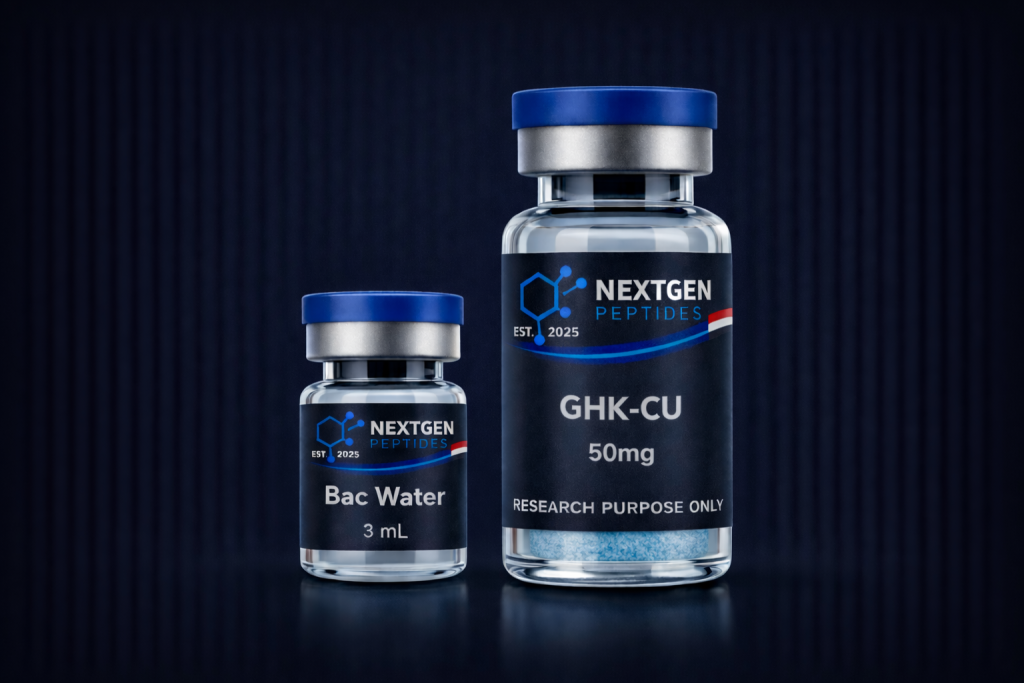
- Reconstitute: Add 3.0 mL sterile water → 16.67 mg/mL concentration.
- Typical range: 1.0–2.0 mg per injection (most common protocols use 5 days/week or 3×/week).
- Easy measuring: At 16.67 mg/mL, 1 unit = 0.01 mL ≈ 167 mcg on a U‑100 insulin syringe.
- Storage: Lyophilized: store at −20 °C (−4 °F) or below; reconstituted: refrigerate at 2–8 °C (35.6–46.4 °F) and use within 30 days.
Dosing & Reconstitution Guide
Educational guide for reconstitution and daily dosing
Standard / Gradual Approach (3 mL = ~33.3 mg/mL)
|
Week |
Daily Dose |
Units (per injection) (mL) |
|---|---|---|
|
Weeks 1–4 |
1.0 mg |
3 units (0.03 mL) |
|
Weeks 5–8 |
1.5 mg |
4.5 units (0.045 mL) |
|
Weeks 9–12 |
2.0 mg (2000 mcg) |
6 units (0.06 mL) |
Frequency: Inject once daily subcutaneously, 5 days per week (Mon–Fri) with weekends off[5]. For ≤10-unit (≤0.10 mL) administrations, consider 30- or 50-unit insulin syringes for improved readability.
Supplies Needed
Plan based on an 8–12 week daily protocol (5 days/week) with gradual titration.
- Peptide Vials (GHK-Cu, 100 mg each):
- 8 weeks (~40 injections, ~50 mg total) ≈ 1 vial
- 12 weeks (~60 injections, ~90 mg total) ≈ 1 vial
- Insulin Syringes (U-100, 30- or 50-unit preferred):
- Per week: 5 syringes (1/day, 5 days)
- 8 weeks: 40 syringes
- 12 weeks: 60 syringes
- Bacteriostatic Water (10 mL bottles): Use 3.0 mL per vial for reconstitution.
- 8–12 weeks (1 vial): 3 mL → 1 × 10 mL bottle
- Alcohol Swabs: One for the vial stopper + one for the injection site each day.
- Per week: 10 swabs (2/day, 5 days)
- 8 weeks: 80 swabs → recommend 1 × 100-count box
- 12 weeks: 120 swabs → recommend 2 × 100-count boxes
Protocol Overview
Concise summary of the once-daily regimen.
- Goal: Support skin rejuvenation, collagen synthesis, wound healing, and anti-aging tissue repair[2][3].
- Schedule: Daily subcutaneous injections, 5 days on / 2 days off, for 8–12 weeks.
- Dose Range: 1–2 mg daily with gradual titration.
- Reconstitution: 3.0 mL per 100 mg vial (~33.3 mg/mL) for accurate unit measurements.
- Storage: Lyophilized frozen at −20 °C; reconstituted refrigerated; use within 30 days.
Dosing Protocol
Suggested daily titration approach.
- Start: 1.0 mg daily for Weeks 1–4; increase to 1.5 mg for Weeks 5–8.
- Target: 2.0 mg daily by Weeks 9–12.
- Frequency: Once per day (subcutaneous), 5 days per week.
- Cycle Length: 8–12 weeks; take 2–4 weeks off before repeating[5].
- Timing: Any consistent time; rotate injection sites.
Storage Instructions
Proper storage preserves peptide quality.
Important Notes
Practical considerations for consistency and safety.
- Use new sterile insulin syringes (30- or 50-unit recommended for small volumes); dispose in a sharps container.
- Rotate injection sites (abdomen, thighs, upper arms) to reduce local irritation[8].
- Inject slowly; wait a few seconds before withdrawing the needle.
- Document daily dose and site rotation to maintain consistency.
- Reconstituted solution should appear clear with a blue tint (from copper); discard if cloudy or discolored.
How This Works
GHK-Cu functions as a “signal peptide” that triggers tissue repair processes by chelating copper(II) ions and delivering this essential trace metal to cells in a bioavailable form[1][9]. Copper is a critical cofactor for enzymes involved in collagen synthesis (lysyl oxidase) and antioxidant defense (superoxide dismutase). Genomic studies show GHK-Cu modulates over 30% of human genes toward a regenerative, anti-aging phenotype[2][10]. The peptide stimulates production of VEGF and bFGF in fibroblasts, promoting angiogenesis and blood flow to injured tissue[3]. GHK-Cu also recruits immune cells to injury sites, increases collagen/elastin/glycosaminoglycan synthesis, and regulates matrix metalloproteinases for balanced tissue remodeling[2][4].
Potential Benefits & Side Effects
Observations from preclinical and clinical literature.
- Skin Rejuvenation: Clinical studies show increased skin thickness, improved dermal collagen density, and reduced wrinkle depth with GHK-Cu application[2].
- Wound Healing: Promotes angiogenesis, granulation tissue formation, and accelerated wound closure in preclinical models[3][4].
- Anti-Inflammatory: Suppresses pro-inflammatory cytokines (TNF-α, IL-6) and provides antioxidant protection[1][11].
- Hair Growth: Observed to enlarge hair follicle size and increase growth rate in studies[2].
- Safety Profile: Excellent tolerability with no serious adverse effects noted; extremely wide safety margin in toxicology studies[9][10].
- Occasional mild injection-site reactions (transient redness or stinging) may occur with subcutaneous administration.
Lifestyle Factors
Complementary strategies for best outcomes.
- Ensure adequate protein and vitamin C intake to support collagen synthesis.
- Maintain proper hydration—tissue repair processes require sufficient water.
- Consider complementary skincare routines (sunscreen, moisturizers) to protect treated skin.
- Prioritize sleep and stress management to support recovery and tissue regeneration.
Injection Technique
General subcutaneous guidance from clinical best-practice resources[8].
- Clean the vial stopper and skin with alcohol; allow to dry.
- Pinch a skinfold; insert the needle at 45–90° into subcutaneous tissue[8].
- Do not aspirate for subcutaneous injections; inject slowly and steadily.
- Wait 5–10 seconds before withdrawing; dispose of syringe in sharps container.
- Rotate sites systematically (abdomen, thighs, upper arms) to avoid lipohypertrophy.
Recommended Source
We recommend Pure Lab Peptides for high-purity GHK-Cu (100 mg).
Why Pure Lab Peptides?
- High-purity, third-party-tested lots with batch COAs.
- Consistent, ISO-aligned handling and documentation.
- Reliable fulfillment to maintain cold-chain integrity.